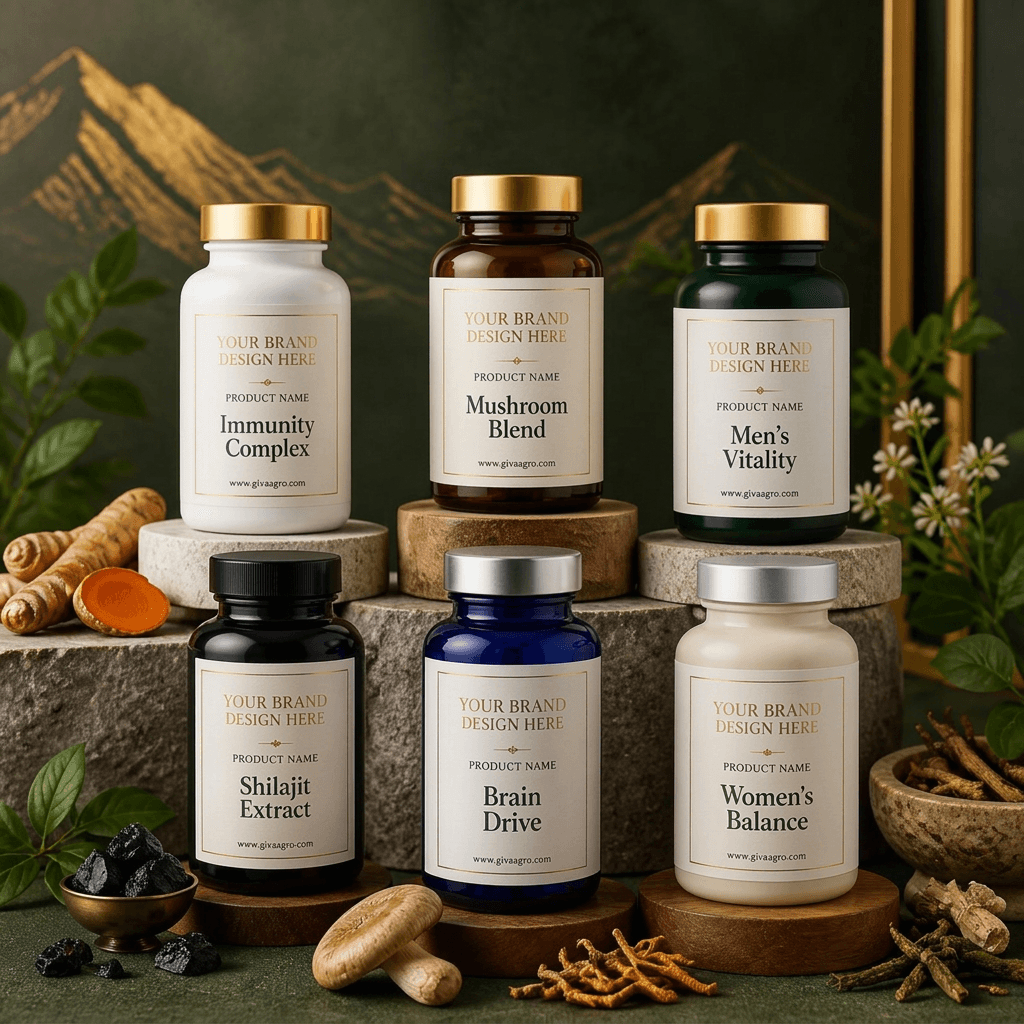
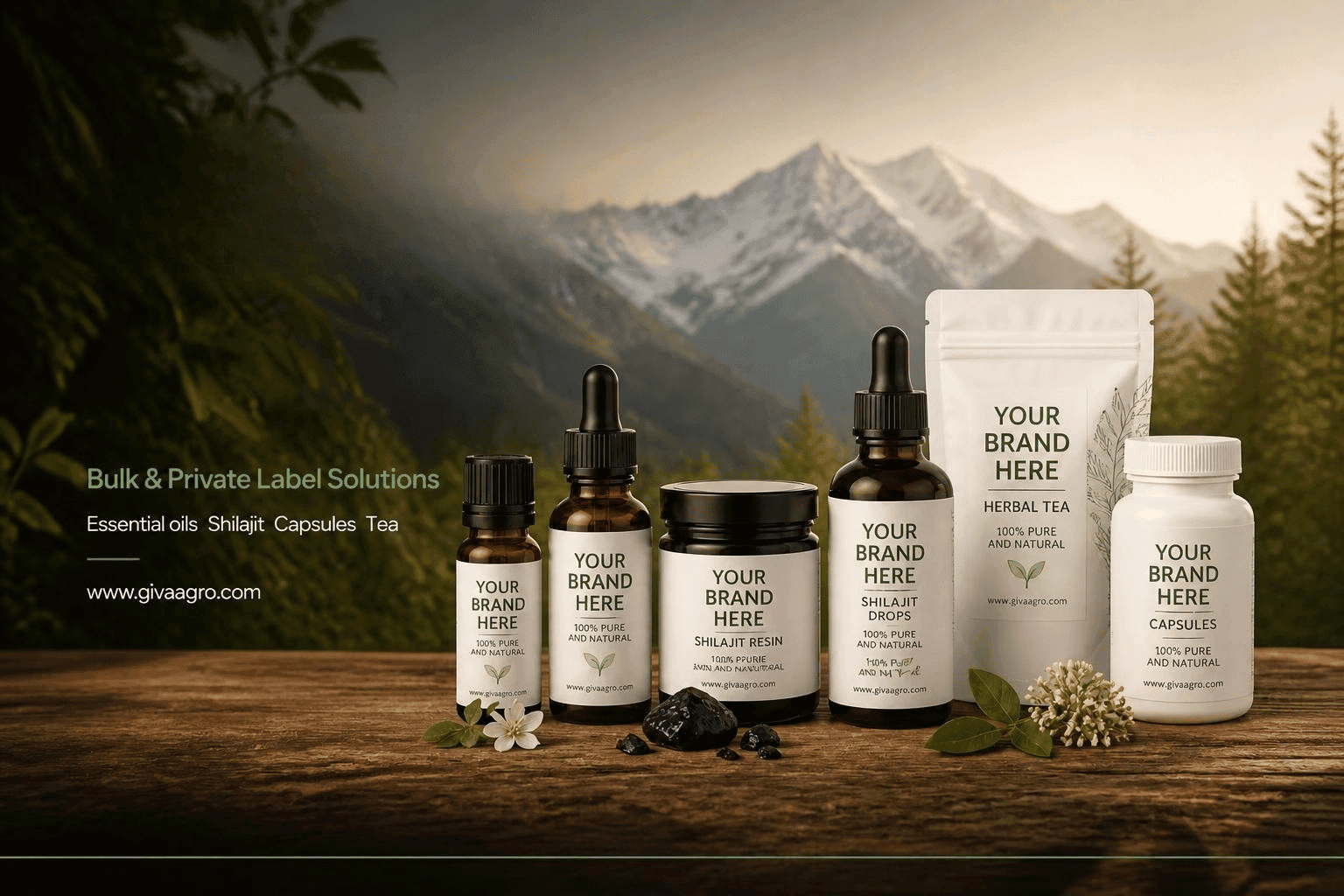
Private label, white label, contract manufacturing or OEM — which do you need?
Four terms, four different relationships
Private label, white label, contract manufacturing and OEM are often used as if they meant the same thing. They do not. Each one splits the work, the risk and the ownership between you and your manufacturer in a different way.
The model you choose decides three things: what you spend before your first sale, how quickly you can launch, and who owns the formula if the relationship ends. It does not change who is legally responsible for the product in your market. That stays with you, or with the importer you appoint, whichever model you pick.
This guide explains each model in plain terms, compares them side by side, and shows which one suits a brand at each stage.
The four models explained
White label: a proven product with your label on it
The manufacturer already makes a finished, market-tested product and supplies the same formula to several brands. You choose the pack and supply the artwork; the product inside does not change.
Development: none. The formula, specification and stability data already exist.
Speed: the fastest route to market, usually weeks from artwork approval.
Differentiation: the lowest. Another brand may sell an identical formula.
Formula ownership: stays with the manufacturer.
Suits: testing a new market or channel, a range extension, or a retailer's own-brand line where price leads.
Private label: a product made and sold for your brand
The terms are often swapped, but private label usually means the product is adapted for you and sold only under your brand. The manufacturer starts from a formula in its library, then adjusts the dose, flavour, format, pack or claim wording for your market. You approve the final specification.
Development: light. Samples arrive in days or weeks rather than months.
Differentiation: moderate, and higher if you agree exclusivity.
Formula ownership: the base formula normally stays with the manufacturer. Your adaptations should be documented, and any exclusivity agreed in writing.
Suits: most brands launching their first range.
Contract manufacturing: your formula, made under their GMP
You bring the formula and the specification, from your own R&D team or a consultant. The manufacturer checks feasibility, sources the ingredients and produces to your specification under its quality system. A common variant is bulk supply: the manufacturer delivers powder, resin, extract or unpacked capsules for your own filling line.
Development: yours. The manufacturer's work is technology transfer, trial batches and validation.
Differentiation: high, because the formula is yours.
Formula ownership: yours.
Suits: established brands with their own formulations, or brands moving production from another supplier.
OEM, or custom formulation: a new product built to your brief
OEM (original equipment manufacturing) comes from engineering, where one company makes a product that another sells under its own name. In wellness it usually means the manufacturer develops a new product to your brief, from a benchmark, a target claim, a format and a price point, and then manufactures it for you. Some industries call this ODM (original design manufacturing).
Development: the longest. Expect two to three sample rounds before sign-off, then stability testing.
Differentiation: the highest. Nobody else has the product.
Formula ownership: set by the contract. Brands that pay for development commonly own the final formula, but only if the agreement says so.
Suits: brands that need a hero product their competitors cannot buy.
Who owns the formula, and what to agree in writing
Most disputes between brands and manufacturers start with an assumption nobody wrote down. Whichever model you choose, settle these points in the supply agreement before the first purchase order:
Formula ownership. Who owns the final formula, and whether you can take it to another manufacturer. For custom work, link ownership to payment of the development fee.
Exclusivity. Whether the manufacturer may sell the same or a similar formula to others, and for which territories, channels and period.
Specification. The approved specification, the test methods and the limits each batch must meet, so acceptance or rejection is objective.
Change control. The manufacturer must tell you before it changes an ingredient supplier, a process step or a site, because a change can alter your label or your registration.
Quality agreement. How deviations, complaints, recalls and retained samples are handled, and in what timeframe.
Regulatory documents. Who prepares the technical file, who keeps a copy, and how quickly the manufacturer answers your authority's questions.
Brand and artwork. Your brand name, logo and artwork belong to you. Register the trade mark in each market before launch: one EU trade mark through EUIPO covers all EU countries, and Australia and New Zealand each need their own.
Commercial terms. Minimum order, price review, lead times, Incoterms and payment terms.
Confidentiality. A non-disclosure agreement covering your brief, your customers and your volumes.
Exit. What happens to the formula, open orders, remaining stock and paid-for tooling such as moulds and printing plates if either side ends the agreement.
Which model fits your stage
Your situationStart withWhyTesting a new market or channelWhite labelLowest cost and fastest launch, so you learn what sells before you investLaunching your first rangePrivate labelA proven base adapted to your market, with your own specificationYou already own a formulaContract manufacturingYou keep the IP and gain capacity, documentation and export handlingYou need a product competitors cannot buyOEM / custom formulationDifferentiation and, if agreed, ownership of the formulaYou run your own filling or encapsulation lineBulk supplyStandardised material to your specification, for your own packing
Many brands mix models. A typical range has one custom-formulated hero product, with private label products around it. Shilajit brands, for example, often launch a resin under private label, then add drops or capsules once the first format sells.
The cheapest way to find out is to start with one SKU, prove it with real customers, then scale.
Frequently asked questions
Is private label the same as white label?
People often use the terms interchangeably. The useful difference is that white label is an existing product relabelled as it stands, while private label is adapted to your specification and sold only under your brand.
Can I switch models later?
Yes, and many brands do. A common path is a white label launch, then a private label range, then a custom-formulated hero product. Agree formula ownership and exclusivity at each step, so the switch is clean.
Do I need my own formula for contract manufacturing?
Yes, or at least a full specification. If you have neither, private label or custom formulation is the right starting point.
Who registers or notifies the product in my market?
You, your importer or an agent you appoint. The manufacturer supplies the technical data; it cannot hold the market role for you.
What should I send to get a useful quotation?
The market, the category, the format, your volume and the target landed cost. With those five, the first reply can include indicative pricing.
Not sure which model fits?
Send us the market, the category and the volume. We will tell you which model makes sense, what it costs, and how long it takes, including where a product will not work in your market.
Request a quote · See our OEM and private label capabilities